

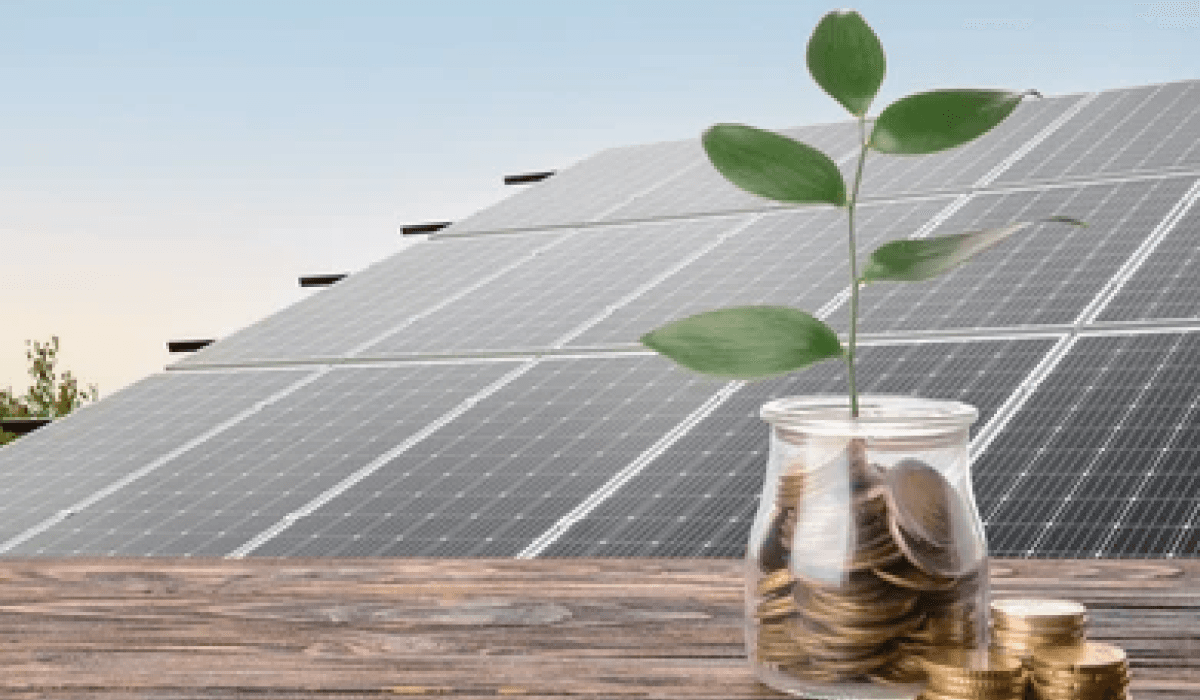
The most practical question anyone asks before going solar is simple: how long before the system pays for itself? In Lucknow and across Uttar Pradesh, the honest answer in 2026 is 4 to 6 years for most homes - and closer to 3 to 4 years for households with high electricity bills or businesses on commercial UPPCL tariffs. After payback, your panels continue generating electricity for another 19 to 21 years with almost no cost, turning the initial investment into a long-running source of savings.
This guide explains how solar payback is calculated, what the typical numbers look like for different system sizes in UP, and the specific factors that shorten or extend the recovery period in the Lucknow, Kanpur, Barabanki, and Unnao markets in 2026.
How to Calculate Your Solar Payback Period
The payback period is the time it takes for cumulative savings from your solar system to equal the net cost you paid. The formula is straightforward: net system cost divided by annual electricity bill savings. But each of these two numbers has layers worth understanding.
Net System Cost: What You Actually Pay After Subsidy
The gross cost of a rooftop solar system in UP in 2026 ranges from Rs 65,000 to Rs 75,000 per kW for quality monocrystalline panels with a reliable inverter. But what matters for payback calculation is what you pay after the PM Surya Ghar Muft Bijli Yojana central subsidy.
Under the 2026 subsidy structure, residential consumers receive Rs 30,000 per kW for the first 2 kW and Rs 18,000 for the third kilowatt. This means a 1 kW system attracts Rs 30,000 subsidy, a 2 kW system attracts Rs 60,000, and a 3 kW system attracts the maximum Rs 78,000. For systems above 3 kW, the central subsidy stays capped at Rs 78,000 for residential connections.
A 3 kW system with a gross cost of around Rs 1.75 to Rs 2 lakh, after the Rs 78,000 central subsidy, costs you Rs 97,000 to Rs 1.22 lakh net. This net number is your starting point for payback calculation - not the gross figure that some installers quote upfront.
Annual Savings: The Other Half of the Equation
Annual savings are determined by how many units your solar system generates and how much you are currently paying per unit from UPPCL. In Lucknow, the capital falls under LESCO, while neighbouring cities like Kanpur, Barabanki, Unnao, and Raebareli have their own discoms under UPPCL. All UP residential tariffs in 2026 follow broadly similar slab structures.
Domestic consumers paying upper-slab tariffs of Rs 6 to Rs 7 per unit save considerably more per unit than those in lower slabs. For the payback calculations below, we use an effective tariff of Rs 6.50 per unit, which is realistic for any household consuming more than 250 units per month - the typical profile of a Lucknow home suitable for a 3 kW or larger system.
A 3 kW system in central UP generates approximately 360 to 390 units per month across the full year, averaging about 4,500 units annually. At Rs 6.50 per unit, that is Rs 29,250 in annual savings before factoring in net metering and the 300 free units component of PM Surya Ghar.
Payback Period by System Size for UP Homes in 2026
The following estimates assume a Lucknow or UP residential installation, quality monocrystalline panels, south-facing roof with minimal shading, and an effective UPPCL tariff of Rs 6.50 per unit. Net costs reflect the PM Surya Ghar central subsidy.
1 kW System: Very Small Homes and Flats
Gross cost approximately Rs 68,000 to Rs 75,000 minus Rs 30,000 subsidy equals net cost of Rs 38,000 to Rs 45,000. Generates about 1,500 units per year, saving Rs 9,750 annually. Payback: 4 to 5 years. Suitable for a small flat consuming 100 to 150 units per month, but the subsidy efficiency is highest at larger sizes.
3 kW System: The Most Common Choice
This is the system most homeowners in Lucknow, Barabanki, and Raebareli install. Net cost after Rs 78,000 subsidy: Rs 95,000 to Rs 1.15 lakh. Annual generation approximately 4,500 units, annual savings Rs 27,000 to Rs 32,000 at upper-slab tariffs. Payback: 3.5 to 4.5 years. Over 25 years, cumulative savings (assuming 5 percent annual tariff increases) exceed Rs 13 to Rs 15 lakh.
5 kW System: Larger Homes with AC Load
Net cost after Rs 78,000 maximum subsidy: Rs 2.5 to Rs 3 lakh. Annual generation approximately 7,200 to 7,500 units, annual savings Rs 46,000 to Rs 52,000. Payback: 5 to 6.5 years. This system suits households running two or more ACs plus standard appliances. In cities like Unnao and Kanpur where grid outages are more frequent, the reliability value also contributes to the return.
Commercial Systems (Above 5 kW)
Businesses on commercial UPPCL tariffs pay Rs 7 to Rs 9 per unit in 2026, making their savings per unit higher than residential. A 10 kW system on a shop or office in Lucknow generates about 14,400 to 15,000 units annually and saves Rs 1 to Rs 1.35 lakh per year at commercial rates. Combined with 40 percent accelerated depreciation in year one, commercial solar payback often falls to 3 to 4 years even without residential subsidy.
What Shortens or Extends Your Payback Period
The estimates above are starting points. Your actual payback period depends on several factors specific to your roof, consumption pattern, and installation quality.
Factors That Shorten Payback
A higher current electricity bill is the single biggest driver of faster payback. If you are spending Rs 5,000 to Rs 8,000 per month on UPPCL bills, a 5 kW system saves you nearly half the gross cost in the first year alone. South-facing roofs with no shading from trees, water tanks, or neighbouring buildings generate 10 to 20 percent more than east or west-facing alternatives, compressing payback by 6 to 18 months. Choosing an EMI product where monthly instalments are less than your current bill makes the system cash-flow positive from day one, effectively reducing the psychological payback to zero.
Net metering under UPPCL is another accelerator. Surplus units exported to the grid during working hours - when your home may be empty - come back as bill credits used in the evening. Households in Barabanki and Raebareli report 12-month bill reductions of 85 to 100 percent when net metering is combined with PM Surya Ghar's 300 free units per month component, pushing effective payback below 4 years.
Factors That Extend Payback
Low current consumption is the most common reason payback gets stretched. A household consuming under 150 units per month pays mostly in the lower tariff slabs, reducing savings per unit and pushing payback past 6 or 7 years. Significant roof shading - from a boundary wall, a staircase tower, or a large tree on the south side - can reduce generation by 15 to 30 percent. Choosing a cheaper inverter or lower-grade panels to cut upfront cost often results in higher degradation over time, reducing the lifetime savings and offsetting the initial saving.
At Sunwize, we always model payback based on your actual 12-month consumption history and a site-specific shadow analysis before recommending a system size - because an undersized or oversized system both stretch payback unnecessarily.
Using Payback Period to Make Your Decision
A payback period of 4 to 6 years on a 25-year asset is an exceptional financial return by any standard. After payback, your solar system continues generating electricity worth Rs 30,000 to Rs 60,000 per year for another 19 to 20 years, all with minimal maintenance cost (typically Rs 1,500 to Rs 3,000 per year for annual servicing). The effective annual return on a 3 kW solar investment in UP in 2026, calculated over 25 years, typically works out to 18 to 22 percent - significantly above fixed deposits, gold, or most equity funds on a risk-adjusted basis for a homeowner.
The best way to get your personal payback estimate is to gather your last 12 UPPCL bills and calculate your average monthly units. This single number drives the sizing calculation that determines your subsidy, your savings, and your payback period. Any serious installer should provide this analysis before asking you to sign anything.
For homeowners in Lucknow, Kanpur, Barabanki, and across UP, the payback arithmetic in 2026 is among the most favourable it has ever been - with high tariffs, a strong central subsidy, and well-established UPPCL net metering policy all working in the same direction.
Related Keywords